
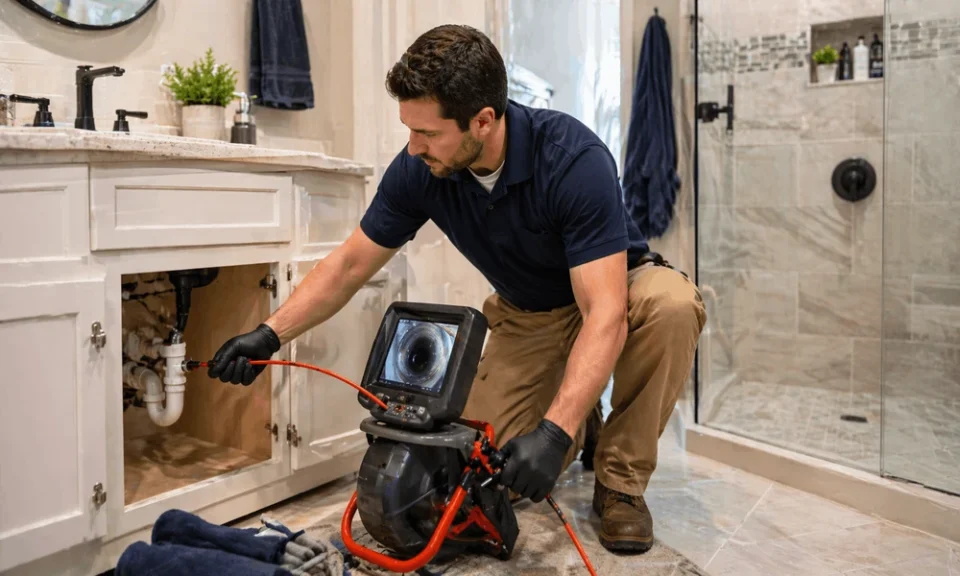
Ask almost any long-time resident about their tap water and you will hear the same thing: white crust on the faucets, spotty glasses, and a shower door that never quite looks clean. It is not your imagination, and it is not a cleaning problem. It is a plumbing problem that builds slowly behind the walls. A trusted Las Vegas plumber sees the results of it every week, from sluggish fixtures to water heaters that give out years early. Here is a room-by-room look at where hard water does its damage and what you can do about it.
Why Las Vegas Water Is So Hard
Most of the valley’s drinking water starts as Colorado River water stored in Lake Mead, and it picks up dissolved minerals on the way. Calcium and magnesium are the main ones. Recent utility reports put local hardness at roughly 280 to 300 parts per million, though the exact number depends on your utility and the year. For comparison, the USGS hardness scale classifies anything above 180 mg/L as very hard. So Las Vegas sits well past that line.
The water is safe to drink. Hardness is a nuisance, not a health risk. The trouble is what those minerals do once the water is heated, evaporated, or pushed through pipes for years.
The Kitchen: Spots, Scale, and Slow Appliances
The kitchen is where most people first notice the problem.
- Faucet aerators clog with chalky buildup, which weakens water flow.
- Dishwashers leave a cloudy film on glassware because minerals dry on the surface.
- Coffee makers and ice machines collect scale inside, which slows heating and shortens their life.
- Garbage disposals and sink drains can gather mineral deposits around fittings.
If your faucet pressure has dropped, unscrew the aerator before assuming something bigger is wrong. If it is packed with crusty white or tan flakes, that is a hard water clue.
The Bathroom: More Than a Cosmetic Issue
Showerheads are the usual victims. Mineral deposits plug the tiny spray holes, so the stream gets uneven and weak. Toilet fill valves and flappers also suffer, since scale can keep them from sealing properly. A toilet that runs on and off for no clear reason is often dealing with mineral buildup rather than a worn part.
Soap behaves differently in hard water too. It reacts with calcium to form soap scum, which is why tubs and tile need more scrubbing and why you may feel a film on your skin after washing.
The Water Heater: Where the Real Money Is
Heat makes hard water worse. When water is heated, dissolved minerals come out of solution and settle as scale. The USGS notes that this scale can reduce equipment life, raise water heating costs, and lower the efficiency of electric water heaters.
In a tank heater, scale collects at the bottom and coats the heating elements. Warning signs include:
- Popping or rumbling sounds when the heater runs
- Hot water that runs out faster than it used to
- Rusty or cloudy water from hot taps only
- A higher energy bill with no change in habits
Regular flushing and inspection can slow the damage. Tankless units are especially sensitive to scale, so they typically need descaling on a schedule.
The Pipes Themselves
This is the part you cannot see. The USGS explains that long-term hard water flow can build up scale inside pipes, gradually narrowing them and reducing water pressure. Older homes with galvanized or aging metal pipes tend to show this first, but any system can develop buildup at joints, valves, and fittings.
Signs that the problem has moved into the pipes include low pressure at several fixtures at once, uneven hot water, and repeated clogs.
Practical Steps You Can Take
- Test your water. Hardness test strips are inexpensive and give a quick reading.
- Clean aerators and showerheads every few months with a vinegar soak.
- Flush your water heater once a year, or as recommended for your model.
- Consider a softener or conditioning system if scale is a constant fight. Whole-house systems protect fixtures, appliances, and pipes together.
- Schedule a plumbing inspection if you have low pressure, noisy pipes, or an aging water heater.
When to Call a Professional
Cleaning aerators is a weekend job. Diagnosing scale inside pipes, replacing a failing water heater, or choosing the right treatment system is not. Call a licensed plumber if you notice:
- Pressure that has dropped across the whole house
- A water heater older than about 10 years that is noisy or inefficient
- Leaks around fittings that look crusted with mineral deposits
- Discolored water that does not clear after running the tap
Catching scale early is far cheaper than replacing pipes or a burned-out water heater.
The Bottom Line
Hard water is part of life in Las Vegas, but it does not have to take years off your plumbing. Know the signs in each room, do the small maintenance jobs on schedule, and get a professional opinion when the symptoms stack up. A little attention now keeps water flowing strong and your appliances working long after the neighbors have replaced theirs.
