
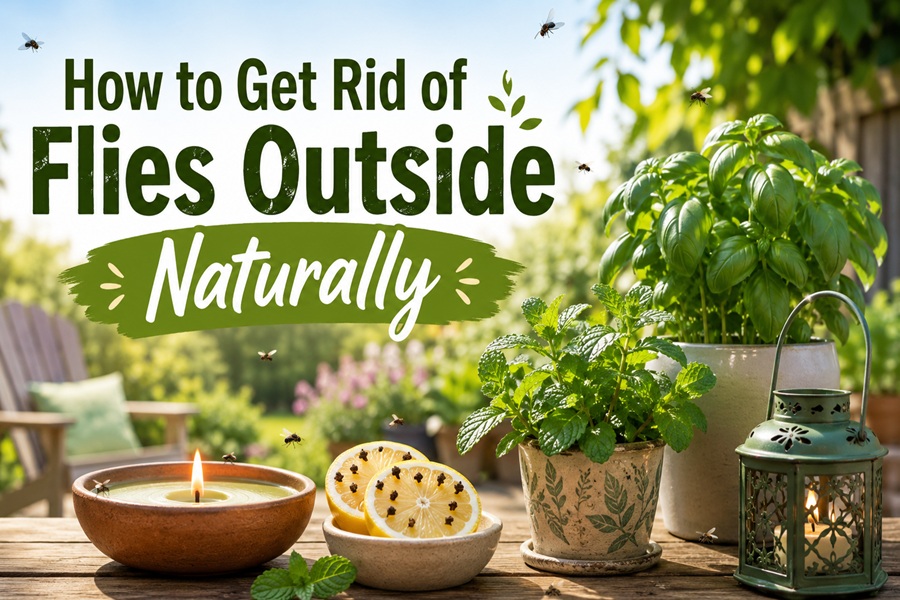
To get rid of flies outside naturally, do three things in order. Remove what attracts them (food, waste, and moisture), intercept the rest with traps placed 20 to 30 feet away from where you sit, and keep pressure on all season. Fans, repellent plants, and DIY vinegar traps help most as backup, not as your only plan.
Flies can ruin a barbecue, a quiet porch morning, or a simple meal outside. The good news is you do not need harsh chemicals to win. You need the right methods in the right order.
This guide ranks natural fly control by how well it actually works. It also calls out the popular tricks that do nothing, so you stop wasting time on myths.
| Quick Overview | Details |
|---|---|
| Best first move | Sanitation and moisture control |
| Best quick fix for a spot | A box fan or oscillating fan |
| Best backup tool | A vinegar trap placed far from seating |
| Weakest methods | Scent repellents, candles, gimmicks |
| Works best when | You combine two or three methods |
| Fully chemical-free | Yes, every method below |
What Attracts Flies to Your Yard in the First Place?
Flies do not build nests on your property. They fly in from yards, parks, farms, and dumpsters, drawn by scent from surprising distances. Even a clean yard gets swarmed if something smells like food or rot.
The most common outdoor attractants are:
- Open or unwashed garbage and recycling bins
- Pet waste left on the lawn
- Compost piles and fallen, rotting fruit
- Outdoor pet food bowls
- Grill grease trays and food residue
- Standing water and chronically damp mulch
- Outdoor drains and clogged gutters
Remove the invitation and far fewer flies choose your yard. This one step does more than any spray.
What Kinds of Flies Are You Dealing With Outside?
Different flies respond to different tactics, so a quick ID helps.
| Fly type | How to spot it | What draws it |
|---|---|---|
| House fly | Gray, most common | Food waste, garbage, pet waste |
| Blow fly | Metallic blue or green shine | Dead animals, garbage, compost |
| Flesh fly | Large, gray racing stripes | Carcasses, pet waste, decay |
| Cluster fly | Slow, slightly larger | Gathers on walls to overwinter |
| Fruit and drain flies | Tiny | Ripe fruit, moist drains, film |
| Biting flies | Horse, deer, stable flies | Blood, moist soil, standing water |
Here is the key split. Common house flies do not bite. If something is biting you outside, it is likely a horse, deer, or stable fly. Those need a moisture-first, trap-based approach, covered further down.
Why Do Flies Multiply So Fast Outside?
Fly problems seem to explode overnight because of simple math.
A single female house fly lays batches of 75 to 150 eggs and can produce several hundred in her life. In warm weather, an egg can become a breeding adult in about 7 to 10 days. Adult house flies then live roughly 15 to 30 days.
So a few flies you ignore today can become a swarm within two weeks. Acting early is far easier than fighting a full population later.
What Is the Fastest Natural Way to Get Rid of Flies Outside?
The most reliable natural plan is a three-step system. Any single trick fails on its own. Together, these three shrink the swarm.
- Remove attractants. Seal trash, pick up pet waste, rinse bins, clean the grill, and clear fallen fruit. Fix moisture from leaks, gutters, and damp spots.
- Intercept with traps placed far away. Traps attract flies, so never put them by your seat. Place them 20 to 30 feet away, between the fly source and your patio, so flies get pulled away from you.
- Keep pressure on all season. New flies arrive daily. Refresh traps, keep up sanitation, and stay consistent from spring through early fall.
That trap-placement rule is the single most common mistake people make. A trap next to the table makes the problem feel worse, not better.
How Do You Make a Natural Fly Trap at Home?
Homemade traps are cheap, chemical-free, and effective when baited right. The dish soap is the secret. It breaks the surface tension so flies sink instead of escaping.
| DIY trap | What you need | How to build it |
|---|---|---|
| Vinegar trap | Apple cider vinegar, 1 tsp sugar, 1 drop dish soap | Fill a jar, cover with plastic wrap, poke small holes |
| Sugar-water bottle | Cut plastic bottle, sugar water or fruit | Invert the top like a funnel into the base |
| Fruit and wine bait | Overripe fruit, splash of wine or beer, soap | Cover, poke holes, set away from seating |
Recipe tip for the vinegar trap: use apple cider vinegar as the base, add a teaspoon of sugar, then one drop of dish soap. Cover tightly, poke a few small holes, and set it well away from where you relax.
Reusable outdoor bag traps also work and can catch hundreds of flies. They smell strong as they fill, so hang them far from the patio and out of direct view.
Do Fans Really Keep Flies Away Outside?
Yes, and this is the most underrated trick. Flies are weak fliers. A steady breeze from a box fan or oscillating fan makes it hard for them to land or hold a course.
For a party, a barbecue, or a dining table, a fan is often the single most reliable spot fix. It is cheap, silent enough, and needs no chemicals. Point it across the food and seating area.
Which Plants and Herbs Repel Flies Naturally?
Strong-scented plants make a small area less inviting. Keep them in pots near doors, windows, and seating for the best effect.
| Plant or herb | Why flies avoid it |
|---|---|
| Basil | Pungent oils flies dislike |
| Lavender | Strong floral scent |
| Mint | Sharp menthol smell |
| Rosemary | Woody, aromatic; good near seating |
| Marigold | Contains a natural repellent compound |
| Bay leaf | Strong dried-leaf aroma |
| Lemongrass | Source of citronella-type scent |
| Catnip | Nepetalactone, a known insect repellent |
| Nasturtium | Deters many garden pests |
| Tansy and wormwood | Bitter, strongly aromatic |
Be honest about the ceiling here. Plants help within a few feet in still air. Treat them as a pleasant supplement, not a full solution.
Do Essential Oils Keep Flies Away, and Are They Safe for Pets?
Essential oils can repel flies for a short time. The most effective are peppermint, lemongrass or citronella, eucalyptus, lavender, and clove.
Simple spray recipe: add 10 to 15 drops of oil to one cup of water in a spray bottle, plus a tiny drop of dish soap to help it mix. Shake and mist near doorways, screens, and table edges. Reapply often, since the scent fades fast outdoors.
Important safety note most guides skip: many essential oils are toxic to cats and dogs, including peppermint, eucalyptus, tea tree, citrus, and pine oils. Do not spray them where pets lick, walk, or rest, and never apply oils to animals. If you have pets, lean on fans, traps, and sanitation instead.
What About Citronella Candles and Soap Bars?
Citronella candles work, but only within a few feet of the flame. On a large patio you would need several, and wind erases the effect. Use them at the table for comfort, not as area control.
The Irish Spring soap bar trick is a popular one online. People hang a strong-smelling bar in a mesh bag near the porch. Some swear by it, but the evidence is anecdotal. It is cheap and harmless to try, just do not rely on it alone.
How Do You Stop Flies From Breeding in Your Yard?
Killing adult flies is temporary. Stopping the next generation is what creates lasting relief. This is where most natural guides stop short.
- Diatomaceous earth. Sprinkle food-grade diatomaceous earth on damp breeding spots, near bins, and around compost edges. It dries out larvae and is chemical-free. Reapply after rain.
- Beneficial nematodes. These microscopic organisms attack fly larvae in moist soil and manure. They are a natural biological control, useful near animal areas.
- Manage moisture. Larvae need damp organic matter. Fix leaks, unclog gutters, and dry out soggy mulch.
- Compost the right way. Turn it, cover food scraps with browns, and keep it away from seating.
- Handle pet waste fast. Pick it up every day or two. It is a top fly nursery.
Cut the breeding sites and the swarm shrinks at the root.
How Do You Get Rid of Biting Flies Outside Naturally?
Biting flies are a different fight. Scent plants and vinegar traps do little against them. Focus on their sources and habits instead.
- Dry out standing water and moist soil where they breed.
- Use traps designed for horse and deer flies, placed away from seating.
- Run fans, since biting flies also struggle in a breeze.
- Wear lighter colors, as they are drawn to dark clothing and movement.
If bites keep coming, a nearby water source or pasture is likely feeding them, and that may need targeted help.
What Natural Fly Myths Should You Ignore?
Save your energy. These popular tricks have little or no reliable evidence.
| Myth | Why to skip it |
|---|---|
| Bags of water with pennies | No proven mechanism; widely repeated, rarely works |
| Ultrasonic pest repellers | No solid evidence against flies |
| Bug zappers | Kill some flies but attract more insects and harm beneficial ones |
| Vodka bowls | Weak, short-range at best |
Zappers are the biggest trap. They lure more bugs to your yard and mostly kill harmless or helpful insects, not daytime flies.
What Do Real People Say Works Best?
Across home and garden forums, Reddit threads, and community Q&A boards, a clear pattern shows up from people who have battled outdoor flies for years.
- Fans are the crowd favorite. The most repeated real-world tip is to point a fan at the table. People consistently call it the thing that finally worked.
- Sanitation first, always. Long-time posters agree that no trap beats simply removing the food, waste, and moisture drawing flies in.
- Place traps far away. Community consensus matches the pros: keep stinky traps at the edge of the yard, not by the food.
- Penny bags are a running joke. Many report they did nothing, even as others swear by them, which points to placebo more than proof.
- Diatomaceous earth for larvae and rosemary sprigs near doors come up often from gardeners and backyard-poultry keepers as gentle, chemical-free helpers.
The value of this shared experience is that it is unpaid and repeated by thousands, which is strong real-world proof of what holds up.
How Do You Keep Flies Away Outside Long Term?
Consistency beats intensity. These habits keep fly pressure low all season.
- Pick up pet waste every couple of days
- Keep bins sealed and rinse them now and then
- Clean the grill grease tray after each cook
- Remove fallen fruit and manage compost properly
- Eliminate standing water and damp spots
- Refresh trap placement as fly activity shifts
When Should You Call a Professional?
Natural methods handle most yards. But if flies keep winning despite good sanitation and smart trap placement, the pressure around your property may be too high for DIY.
That often means a nearby farm, dumpster, water source, or dead animal is feeding the swarm. In that case, targeted outdoor fly control can intercept flies before they reach you. That is not a personal failure. It is just population math.
Frequently Asked Questions
What smells do flies hate the most?
Flies avoid strong scents like peppermint, citronella, lavender, basil, clove, and vinegar. The catch is these work only a few feet away and fade fast outdoors, so use them as backup.
Do natural outdoor fly traps actually work?
Yes, when placed correctly. Keep traps 20 to 30 feet from seating, positioned between the fly source and your patio. A trap next to the table pulls flies toward you and makes it worse.
Does dish soap kill flies?
In a trap, yes. Dish soap breaks the water’s surface tension so flies sink and drown instead of landing and escaping. One drop is enough.
Is vinegar or apple cider vinegar better for flies?
Apple cider vinegar works best because its fruity, fermented smell attracts flies strongly. Add sugar and a drop of dish soap for the best homemade trap.
Are essential oils safe to use around pets?
Many are not. Peppermint, eucalyptus, tea tree, citrus, and pine oils can be toxic to cats and dogs. If you have pets, rely on fans, traps, and cleanup instead.
Why are there suddenly so many flies in my yard?
A new attractant usually appeared: garbage left out, pet waste, fallen fruit, a dead animal, or a neighbor’s compost. Hot weather also speeds up breeding, so numbers jump fast.
Are flies harmful or just annoying?
They can be harmful. House flies can carry bacteria and are linked to spreading many illnesses, since they feed on waste before landing on your food.
What is the single best natural method?
There is no single winner. The strongest combo is sanitation plus a fan for your seating area plus a trap placed far away. Two or three methods together beat any one alone.
