
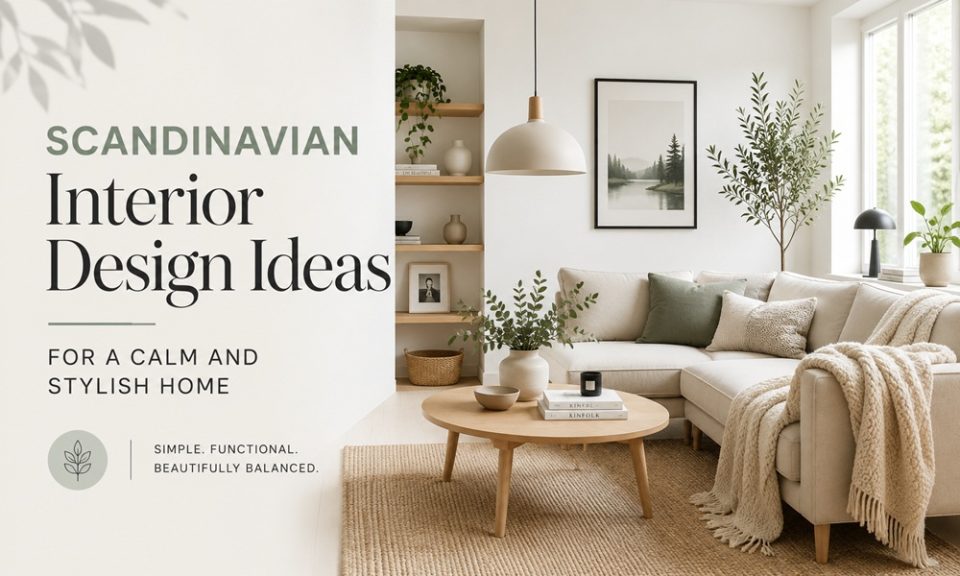
Scandinavian design has stayed popular for over seventy years for one reason: it makes a home feel calm without feeling cold. It is not a look you chase every season. It is a way of thinking about your space.
This guide covers the core principles, the exact color palette with hex codes, a room-by-room plan, and the warmer direction the style is moving in now. Everything is specific enough to act on today.
What is Scandinavian interior design?
Scandinavian interior design is a Nordic philosophy built on simplicity, function, and a strong connection to nature. It began in Denmark, Sweden, Norway, and Finland in the mid-twentieth century as a reaction to ornate, expensive furniture. The goal was beautiful, functional homes that ordinary people could actually afford and enjoy.
The result is a room that feels open, bright, and effortless. Clean lines, pale wood, muted color, and lots of light do the heavy lifting. Warmth comes from texture, not clutter.
What are the core principles of Scandinavian design?
Five ideas define the style. Nail these and the look follows.
- Light first. Nordic designers treat daylight as the most important material in a room. Keep windows bare or use sheer linen.
- Function over decoration. Every piece earns its place. There is no clutter for its own sake.
- Natural materials. Pale wood, wool, linen, leather, stone, and handmade ceramics carry the palette.
- Muted color. Accents are the color of a forest at dusk, never a forest in a picture book.
- Softness, candles, and warm light turn a minimal room into a home you want to stay in.
What colors are used in Scandinavian interiors?
The classic base is a light, warm neutral. Layer in pale wood and one or two muted accents. A useful ratio is 60-30-10: about 60 percent light base, 30 percent secondary tone such as wood or upholstery, and 10 percent quiet accent.
| Role | Color | Hex | Where to use it |
| Base | Warm white / soft greige | F3EFE9 | Walls and large surfaces |
| Wood | Pale oak | D9C2A3 | Floors and furniture |
| Accent | Muted sage | A7B0A0 | Cushions, ceramics, one wall |
| Accent | Dusty rose | C9A9A0 | Textiles and soft touches |
| Contrast | Charcoal | 3B3A36 | Lamp bases, frames, hardware |
The important shift: keep the whole palette warm, not cool. Choose a warm white over a blue-white. That single choice is what gives Scandinavian rooms their signature calm instead of a clinical chill.
How do you add hygge to a room?
Hygge, pronounced hoo-gah, is the Danish idea of coziness and contentment. In design terms it is the difference between a museum and a home. It is what a wool throw, a lit candle, and a warm lamp do to a plain white room.
- Swap cool bulbs for a warm 2700K tone across the room.
- Layer a chunky wool throw and two or three linen cushions in soft neutrals.
- Add a plush rug or a sheepskin so hard floors feel inviting.
- Light candles in the evening and skip the harsh overhead light.
Scandinavian design room by room
Living room
Start with a comfortable sofa in oatmeal or grey linen. Add a pale oak coffee table with tapered legs, a wool rug, and layered cushions. Place a mirror opposite a window to push daylight deeper into the room.
Bedroom
Keep it almost monastic. A low light-oak bed frame, crisp white linen, and one soft accent color is enough. Clear every surface. This room exists for rest.
| Try the Scandinavian sleep method
On a shared bed, skip the single large duvet. Give each sleeper their own separate duvet instead of one shared cover. It ends the nightly tug-of-war, suits partners who run at different temperatures, and looks intentionally layered when made. |
Kitchen
Choose flat-panel, handleless cabinets in matte white or soft grey. Pair them with warm butcher-block counters or simple quartz. Efficiency is the point, so hide clutter and leave counters clear.
What is the difference between Scandinavian, minimalist, and Japandi?
| Style | Core idea | How to tell it apart |
| Scandinavian | Warm, functional simplicity | Pale wood, wool, candles, hygge |
| Pure minimalism | Strip back to essentials | Can feel cold, few natural textures |
| Japandi | Scandinavian plus Japanese calm | Lower furniture, darker wood, slow living |
A quick test: a minimalist room might have a white sofa on a bare concrete floor. A Scandinavian room has that same sofa on warm oak, with a wool throw and a lit candle nearby. Same restraint, more warmth.
How is Scandinavian design changing?
The bones stay the same. The mood is warming and softening.
- Brown is the new beige. Putty, clay, and warm taupe are replacing cool blue-whites.
- Curves are back. Rounded sofas, arched cabinets, and oval tables soften sharp minimalist angles.
- Warm minimalism. The all-white look of the past decade is giving way to cream, caramel, and limewash walls.
- Dark Scandi. A moody variation uses charcoal, deep forest green, and navy for one dramatic room.
- Joyful kitsch. A little playful, quirky decor is welcome now. Personality beats a perfect showroom.
- Responsible wood. There is a clear preference for FSC-certified and reclaimed timber.
What do people get wrong about Scandinavian design?
The most common complaint on design forums is that Scandinavian rooms look cold or sterile. Almost every time, the culprit is the same: a blue-white paint, no texture, and harsh lighting.
The fix is not more stuff. It is warmer whites, natural texture, and softer light. Add one wool throw, switch to warm bulbs, and expose or add pale wood. The room stops feeling like a showroom and starts feeling like a home.
Frequently asked questions
What is the main idea behind Scandinavian design?
That your home should be functional, beautiful, and comfortable without excess. Every piece has a purpose, and warmth comes from light and natural texture rather than decoration.
Is Scandinavian design only white?
No. White is a common base, but the style is warming up. Cream, greige, warm taupe, and even dark charcoal or forest green all fit the current look.
What makes Scandinavian design different from minimalism?
Warmth. Both value simplicity, but Scandinavian design adds natural textures, soft lighting, and cozy hygge elements that pure minimalism often leaves out.
How do I make my home feel Scandinavian on a budget?
Declutter, paint walls a warm neutral, switch to 2700K bulbs, and add a few natural textures like a linen throw, a jute rug, and a plant. These changes cost little and shift the whole feel.
What is the Scandinavian sleep method?
Using two separate duvets on one shared bed instead of a single large cover. It suits couples with different temperatures and looks neatly layered.
